
From nomadic fishing to coming home: How clean energy is changing lives in Kiumba
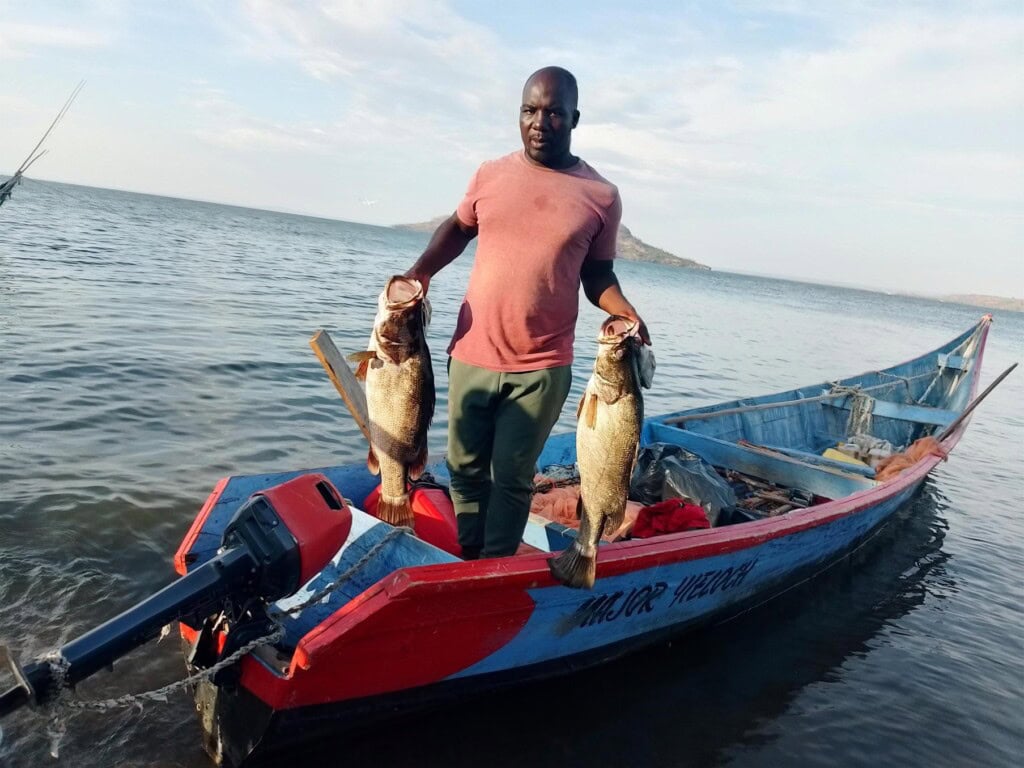
Image above: Erick in his fishing boat
For years, a successful day of fishing on Kenya’s Lake Victoria didn’t always mean a successful day of earning a living.
In Kiumba Beach, Homa Bay County, Kenya, limited cold storage facilities and short buying windows meant that fisherfolk often had to sell their catch quickly at low prices, risk it spoiling, or travel long distances in search of buyers. For many families, this uncertainty affected not only their incomes but daily life itself.
Through our Homa Bay Solar Livelihoods Project, Renewable World, in partnership with local company E-Safiri, and supported by the County Government of Homa Bay, is helping to change that. The project is improving livelihoods by providing solar-powered cold storage and ice-making facilities, increasing access to safe water, strengthening market access, and building the skills and capacity of local fishing and farming communities.

For 37-year-old fisherman Erick Ruku, the impact has been life-changing.
Having fished for Nile Perch on Lake Victoria for more than 20 years, Erick was used to shaping his life around the limitations of the market. Fish buyers in Kiumba traditionally operated for only a few hours each day. If he knew he would arrive too late, he often had no choice but to land his catch elsewhere.
“If I realised that I would reach Kiumba after 2pm, I would land at another beach and sell my fish at a throwaway price. Instead of going home, I would go back to the lake to fish again.”
The search for buyers regularly took Erick to other beaches, sometimes in neighbouring counties. Days away from home became normal, and time with his family was often sacrificed to protect his income.
Today, things look very different.
The introduction of a solar-powered cold room and ice machine at Kiumba Beach means fish can be safely preserved when an immediate sale isn’t possible. The facility has also attracted more buyers to Kiumba, creating a more reliable market and extending trading hours well into the evening.

For Erick, that means less pressure to sell quickly, better opportunities to secure a fair price, and, perhaps most importantly, more time at home.
“We used to live like nomads, landing at different beaches in search of better prices and somewhere to preserve our fish. Sometimes we would stay away for months and some of our family would even move with us. Now we have our own cold storage and ice machine. We have settled because we have a good market and can preserve our catch. We are no longer nomads.”

Erick’s story demonstrates how access to clean energy can do far more than improve livelihoods. By reducing post-harvest losses and creating dependable market opportunities, solar-powered cold-chain infrastructure is helping fishing communities gain greater control over their incomes, strengthen local economies, and spend more time where they belong: at home with their families.
Across the project, around 400 fisherfolk and 100 smallholder farmers are set to benefit from improved storage facilities, while thousands more community members will gain from increased economic opportunities and better access to safe, affordable water. For families like Erick’s, the transformation is already underway.
This work was made possible thanks to the generous support of Empower New Energy.
Find out more about Homa Bay Solar livelihoods project on our projects page, or why not explore the different ways you can get involved in supporting our work.