
On the wings of change: Communities around Shuklaphanta help bring vultures back

Written by Durga Jethara, Project coordinator for our Vultures, Cows and People project.
As dawn breaks over the grasslands of Shuklaphanta National Park in Nepal, vultures rise silently into the morning sky. To some, it may seem like an ordinary sight. To conservationists and nearby communities, however, it signals something far more meaningful: nature is beginning to recover.

Every year, the International Day for Vulture Conservation shines a spotlight on vultures’ vital role as nature’s clean-up crew. By consuming animal carcasses, they help prevent disease, such as anthrax and rabies, reduce pollution and maintain ecological balance. Yet across South Asia, populations have fallen by more than 95% in recent decades due to toxic veterinary medicines, habitat loss and food scarcity, turning their decline into both a conservation and public health crisis.
Today, hope is returning through a new project we are delivering with the Royal Society for the Protection of Birds (RSPB), Bird Conservation Nepal (BCN) and local partner Preservation of Environment and Social Welfare Association of Nepal (PESWAN). Vultures, Cows and People – Strengthening an Ancient Relationship demonstrates how wildlife conservation and community development can go hand in hand, reaching 1,439 households and benefiting more than 6,300 people while helping establish a Vulture Safe Zone around Shuklaphanta National Park.
Conservation starts with people
For families living around Shuklaphanta, livestock are central to daily life and household income. Recognising this connection, the project works with dairy farmers to strengthen livestock management, increase milk production, improve market access through cooperatives, and adopt regenerative farming practices. Together, these activities are strengthening communities and helping them become champions of long-term conservation.
“Before, we knew very little about why vultures were important. Now we understand that protecting them also protects our environment and our livestock. We feel proud to be part of this effort.”
Mrs. Shanti Devi Bhatt, Dairy farmer
This partnership between communities and conservation is creating lasting change, showing how healthier farms and healthier ecosystems can sustain one another.

Making the landscape safe again
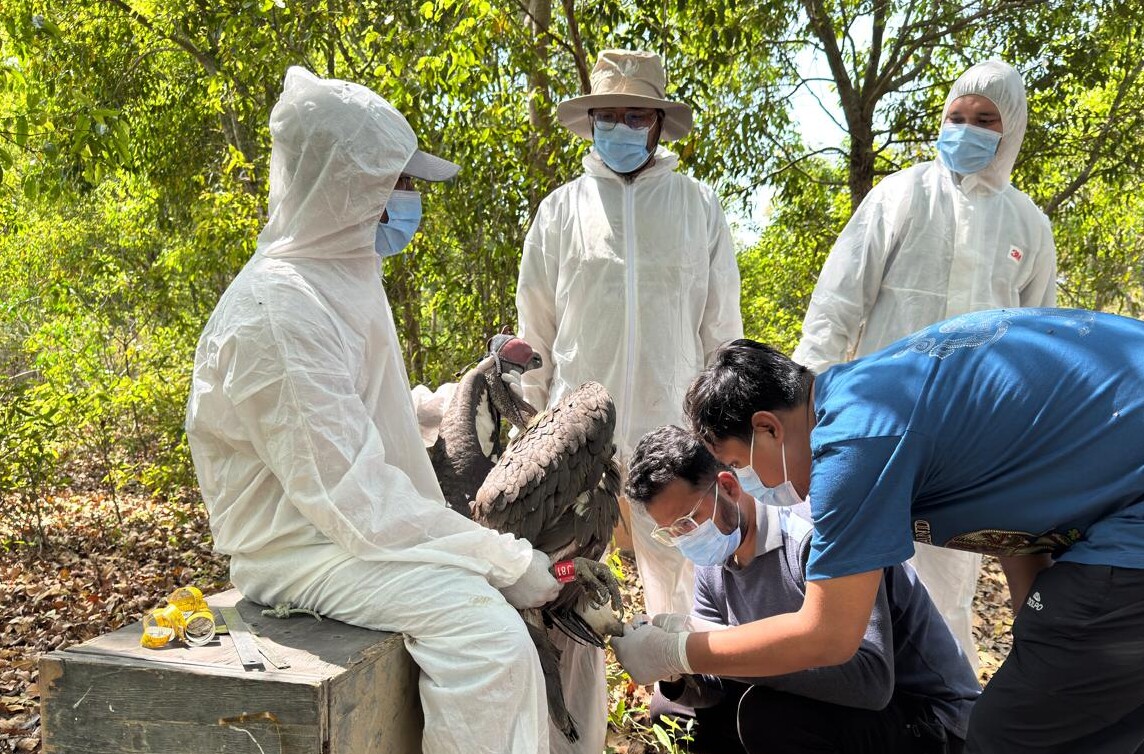
Protecting vultures means not only preserving their habitat but also removing hidden threats from the landscape. By phasing out toxic veterinary medicines that poison vultures through livestock carcasses, monitoring their movements, and establishing local Vulture Rescue Teams to provide timely care, the project is helping populations recover and thrive.
Cow shelters as conservation partners
Cow shelters that have traditionally cared for abandoned or unproductive cattle are now becoming important partners in vulture conservation and environmental stewardship by:
- providing drug-free carcasses
- improving manure and slurry management
- enhancing bio-fertilizer production
“In the past, only a few vultures were seen near the shelter. Now, following the establishment of the temporary feeding center, large numbers regularly gather to feed on carcasses which is a clear sign of progress in conservation.”
Mr. Bhakta Bahadur Khadka, Coordinator, Cow shelter management committee, Krishnapur municipality
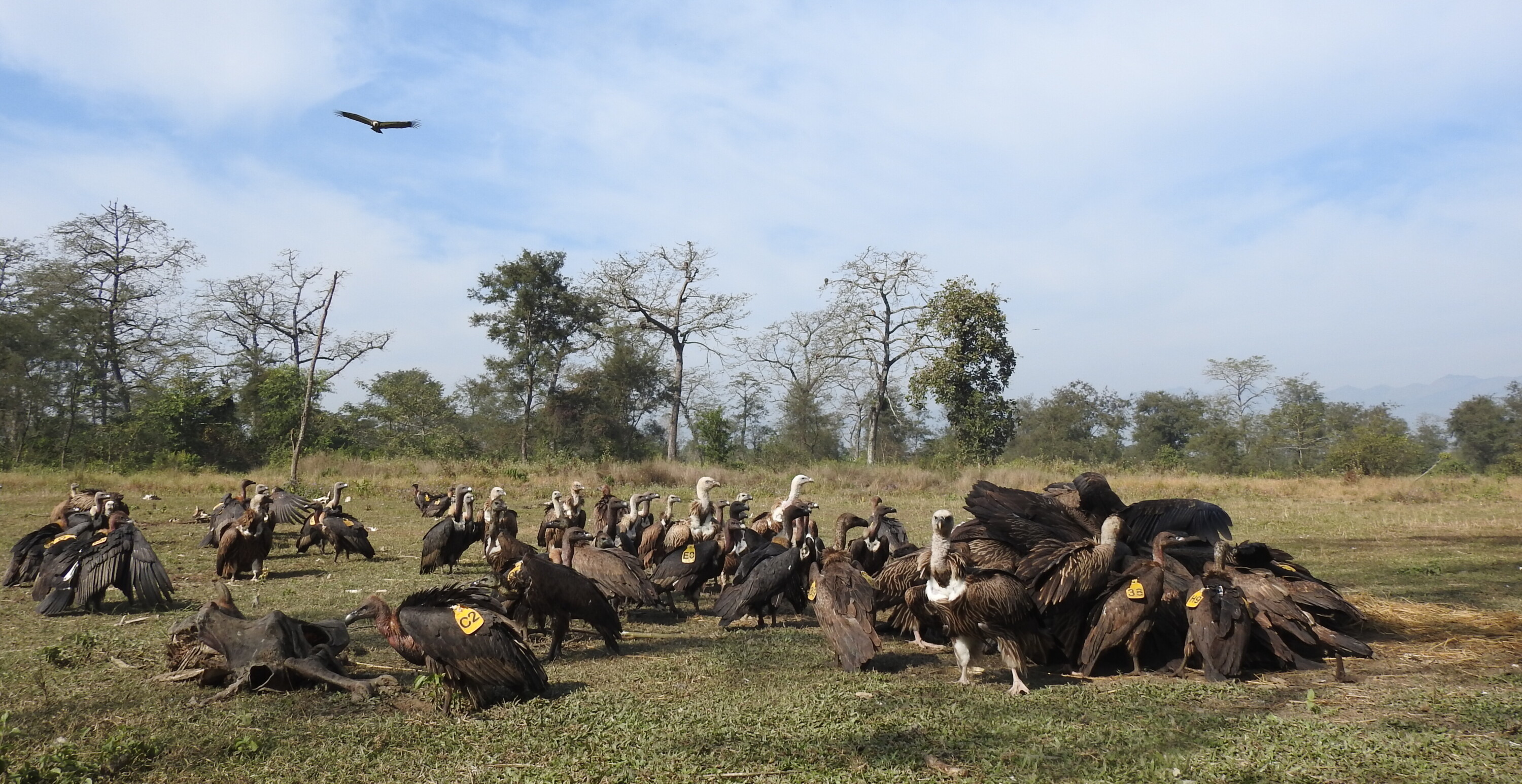
In addition to this, local dairy cooperatives are allocating part of their profits to cow shelter management and supporting the production and marketing of organic fertilizers, which create a practical link between shelters and farmers. It also reflects the cooperatives’ broader commitment to social responsibility and community-led conservation.
These practices promote environmentally responsible farming while generating sustainable income for shelter operations. This mutually supportive approach protects biodiversity, strengthens local livelihoods, and helps create a cleaner, healthier environment for future generations.
“We are privileged to contribute to vulture conservation. Through coordinated action and shared commitment, we are working to safeguard vulture populations and ensure their survival for future generations.”
Mr. Jay Raj Joshi, Chairperson, Sana Kisan Agriculture Cooperative Ltd., Daiji
Building Nepal’s second vulture safe zone
Establishing Shuklaphanta as Nepal’s second Vulture Safe Zone depends on collaboration among communities, cooperatives, conservation organizations, local governments, and the Government of Nepal. Through scientific monitoring, awareness campaigns, and community engagement, the project is creating stronger conditions for long-term protection.
A Vulture Safe Zone cannot be built by conservation organizations alone. It requires shared responsibility from local governments, dairy cooperatives, farmers, cow shelter management committees, and communities. Their participation supports local economies while strengthening a common commitment to protecting vultures and the ecosystems that sustain both people and wildlife.

An ancient relationship worth protecting
“Vultures, Cows and People – Strengthening an Ancient Relationship”reflects a centuries long-standing connection of healthy livestock supported rural livelihoods, vultures maintaining the ecosystem, and communities benefitting from cleaner surroundings. Restoring this relationship means restoring balance for both wildlife and people.
Encouraging signs are already emerging: communities are adopting sustainable farming practices, cow shelters are becoming more resilient, and vultures are returning to the skies above Shuklaphanta.
On this International Day for Vulture Conservation, we recognise and celebrate the farmers, cow shelter managers, local governments, conservation partners, and community volunteers whose collective efforts are making recovery possible. Their work shows that conservation is more than protecting wildlife; it is an investment in healthier ecosystems, stronger livelihoods, and a more sustainable future.
Every vulture soaring above Shuklaphanta carries a story of resilience, partnership, and hope. Together, we can ensure that story continues for generations to come.
With sincere thanks to our partners and project funder, the Darwin Initiative, for their vital support, collaboration, and commitment.
Find out more about this project on our projects page, or explore the different ways you can get involved in supporting our work.