
Shuklaphanta National Park: A model for sustainable tourism

Photo above: A practical session for new nature guides
This World Tourism Day, we’re celebrating how sustainable tourism can support conservation, strengthen local livelihoods and create opportunities for communities. In Nepal’s Shuklaphanta National Park, our CONNECT project is helping make that vision a reality.
Nestled in Nepal’s far west, Shuklaphanta National Park is a remarkable 305-square-kilometre landscape of grasslands, wetlands and forests. Renowned for its population of more than 2,300 swamp deer (barasingha), the park is also home to some of Nepal’s most iconic wildlife, including Bengal tigers, greater one-horned rhinoceroses, wild elephants, leopards and blue bulls (nilgai).
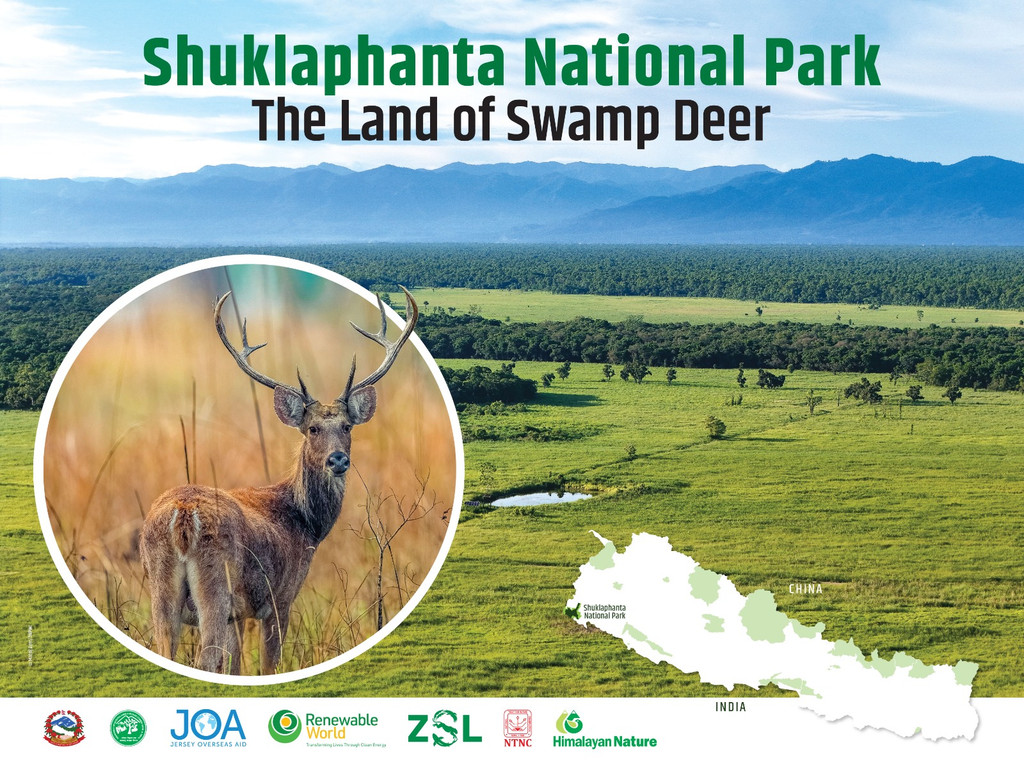
Its rich biodiversity extends to the skies, with around 450 bird species, including the globally significant Bengal florican and Sarus crane. Visitors can also explore pristine wetlands such as Ranital and Shikarital, the Mahakali River and the impressive multi-span suspension bridge at Dodhara Chandani, making Shuklaphanta an increasingly attractive destination for nature lovers.
Through our CONNECT project, local communities are playing a central role in protecting this unique landscape while benefiting from new tourism opportunities. The project has supported training for 50 young women and men in hotel management, helping strengthen the local hospitality sector. A further 30 people, including 12 women, have completed nature-guide training, creating new livelihood opportunities and enabling visitors to experience Shuklaphanta through the knowledge and stories of the local people who know the landscape best.
At the same time, the project is supporting conservation efforts that help local wildlife thrive. This includes managing over 80 hectares of grassland and around 32 kilometres of firelines, improving water availability through solar-powered pumping systems for conservation ponds, and electrifying a range post. A watchtower and two wooden bridges have also been constructed, supporting wildlife management while enhancing visitor experiences.

Creating a sustainable tourism destination also means helping communities coexist safely with wildlife. The project has supported the installation of 560 electric cookstoves, 109 predator-proof corrals and 45 solar lamp posts across four rural municipalities. Alongside awareness raising activities, these interventions help reduce pressure on forests, improve household safety and support more positive human-wildlife coexistence.
Tourism becomes even more meaningful when visitors can connect with local culture and communities. To support this, 8 homestays were supported with solar backup systems and operation and maintenance training. These homestays offer visitors an authentic experience of local life while creating new income opportunities for community members.

Together, these efforts are helping build a future where conservation and tourism reinforce one another. Recent monitoring has recorded 50 tigers in Shuklaphanta, underlining the importance of continued investment in protecting habitats and wildlife. As tourism infrastructure and local skills continue to grow, the park is well placed to attract more visitors seeking authentic, nature-based experiences.
Shuklaphanta is more than a tourist destination. It is a place where wildlife, communities and sustainable tourism are working together to create a positive future for people and nature.
With our gratitude for the vital support of Jersey Overseas Aid (JOA).
Find out more about this project on our projects page, or explore the different ways you can get involved in supporting our work.