
Life in Remote Nepal: Understanding Community Strengths and Challenges
Written by Aastha Chhetri (MEAL & Communication Officer – Nepal team)
In the second part of this two-part blog, Aastha explores what life is like for the communities living in Barahataal – the challenges people face, the beauty of the landscape, and the communities’ enduring resilience.
Rural life in Nepal is marked by a unique balance of simplicity and hardship.
Daily routines rely heavily on physical strength, particularly for commuting and earning livelihoods, in stark contrast to urban living. For communities living near protected areas (often called the ‘buffer zones’), this is further complicated by the constant need to coexist with wildlife. Among Nepal’s 13 national parks, Bardiya National Park, the largest in the lowland Terai, is renowned for rhinos and tigers. Its northern belt is home to one of our newest project sites for REALIZE 2.
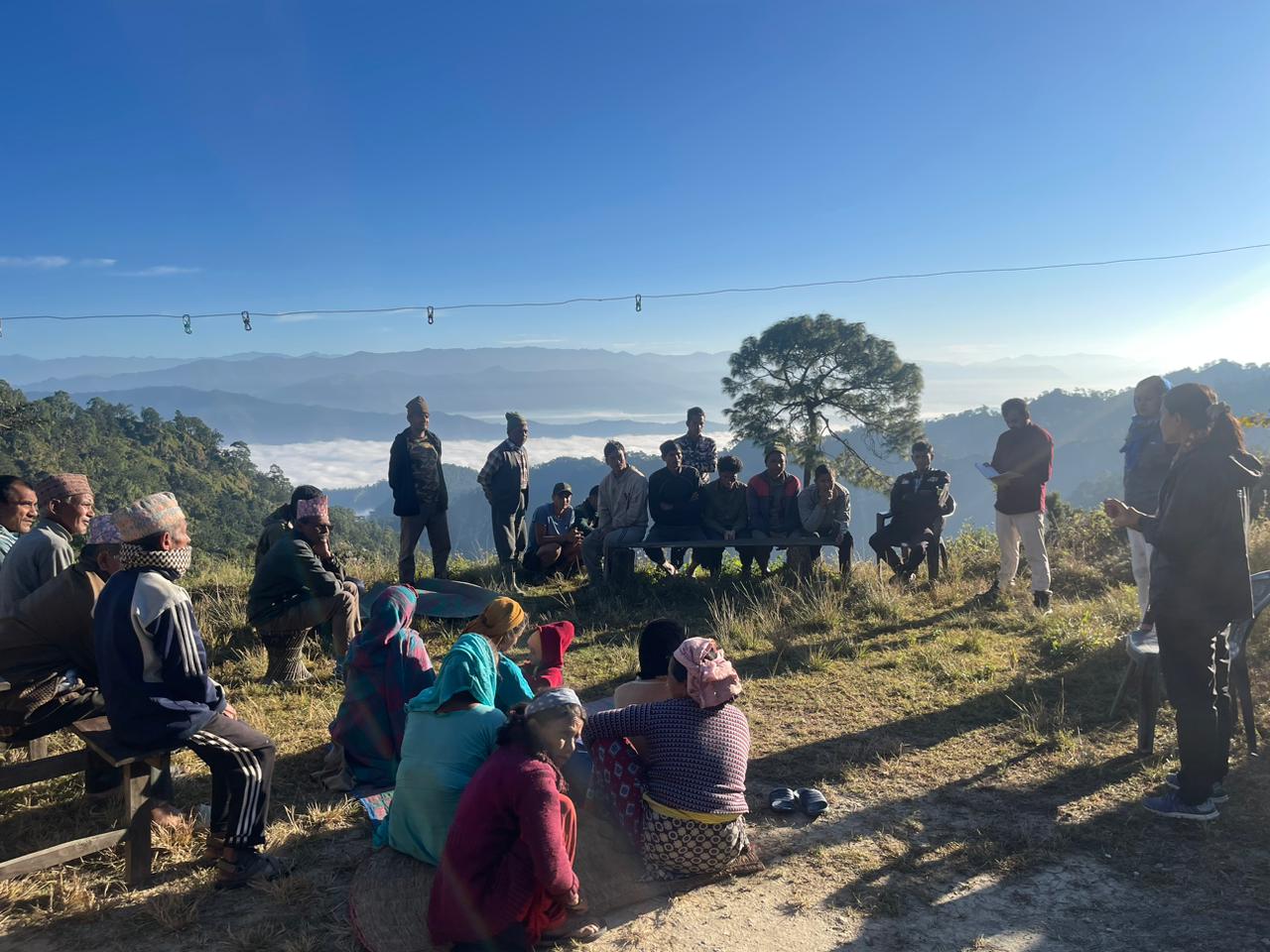
Some members of the Nepal team and I recently visited the area to better understand everyday rural life. Through face-to-face interactions, we aimed to build rapport with the communities and ensure project activities respond to local needs. Our visit focused on the Hariharpur Buffer Zone User Committee which operates under the National Park authority in Barahataal Rural Municipality, Surkhet District. During our visit we met several local communities, the first of which was Sungurkhal.
Our visit to Sungurkhal: Challenges and Aspirations
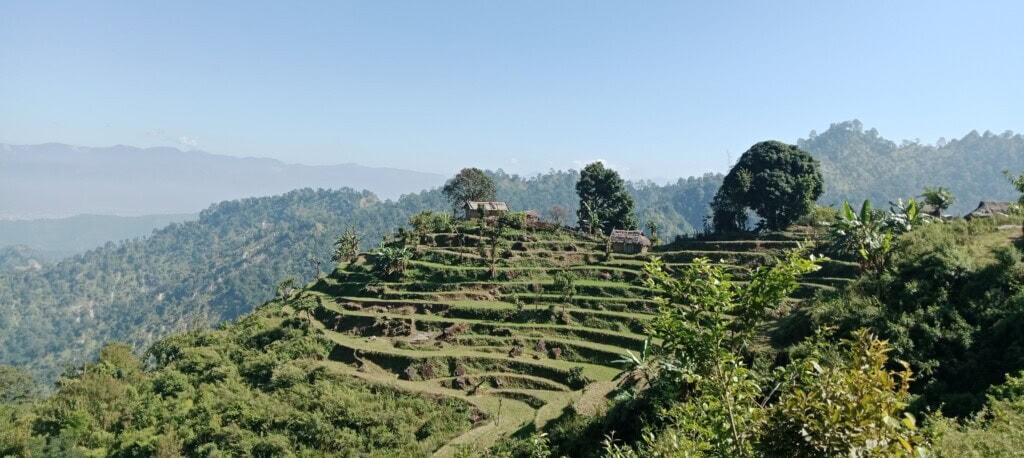
Although Surkhet District serves as the administrative center of Karnali Province, many nearby rural settlements remain highly marginalised. Sungurkhal, located about 20 kilometers from the district headquarters, requires a demanding 6–7-hour hike to reach. Basic services such as reliable electricity, quality education, and accessible healthcare are limited. Families live on both Ailani land (government-owned land without ownership certificates) and Numbari land (privately registered land), often scattered across steep and challenging terrain.
Access to drinking water, health services, and schools require long walks for many households. Agriculture and animal husbandry are the primary sources of livelihood, yet wildlife intrusion is a constant threat. During harvest seasons, community members guard their fields through the night, and many sleep outdoors to protect livestock from predators.
Conversations with residents revealed contrasting aspirations among younger generations. Many young men expressed a desire to migrate to India or urban centres in search of better opportunities. One young man from a relatively well-off family openly shared his wish to go abroad for higher income, improved facilities, and freedom from rural hardships, reflecting a common trend among rural youth. In contrast, another young man spoke passionately about staying in the village to continue farming. After experiencing harsh labour conditions while working for others, he felt motivated to build a meaningful livelihood on his own land, following his father’s example.
An elderly couple continues to farm their ancestral land with dedication despite age-related physical challenges. Their children, unable to endure the demands of rural life, have moved to urban areas, leaving the couple to manage alone.

Gaadapani: Daily Life, Roles, and Resilience
The next stop on our visit was Gaadapani. The village is midway between Sungurkhal and Telpani and can be reached by vehicle from Surkhet, followed by a four-hour uphill hike. Located in the mid-hills, the community consists of around 100 households and appears more accustomed to hosting visitors, often welcoming guests for overnight stays. Each morning began with a stunning sunrise above a sea of clouds. Tractor-accessible roads signal gradual development, and the community’s warmth and hospitality were immediately evident.
Within households, responsibilities are traditionally divided. Women manage housekeeping and meal preparation, often eating only after guests have finished, while men handle outdoor tasks such as purchasing supplies and accompanying visitors. Community leadership remains largely male-dominated, with men serving as chairpersons of cooperatives and user committees. However, nearly every village has an active mothers’ group. Though often unregistered, these groups play an important role in savings, mutual support, and women’s empowerment initiatives.
Firewood remains the primary source of cooking energy, and agriculture is the main source of income. Crop damage from wild animals such as wild boars and porcupines significantly reduces productivity and household earnings. Potatoes are transported to markets by tractor, but most vegetables and onions must be carried downhill for nearly two hours to reach the nearest market. Seasonal fruits are similarly transported using doko – traditional bamboo baskets carried with a forehead strap (namlo).
Telpani: Beauty, Biodiversity, and Community Strength
The trekking routes around Telpani offer breathtaking views of the Birendranagar Valley, Bardiya National Park, and distant Himalayan peaks. The area can be reached either by a three-hour hike from Gaadapani or via Bhurigaun, followed by an hour-long uphill walk. Its location makes it a strategic link between settlements and surrounding forests.
Oli Tole, one of the villages in the area, is known for dense greenery, rich biodiversity, and frequent wildlife sightings due to its proximity to Bardiya National Park. While this offers opportunities for birdwatching and nature-based potential, it also brings heavy costs. Crop damage and livestock loss from wildlife raids are common, threatening both livelihoods and security.
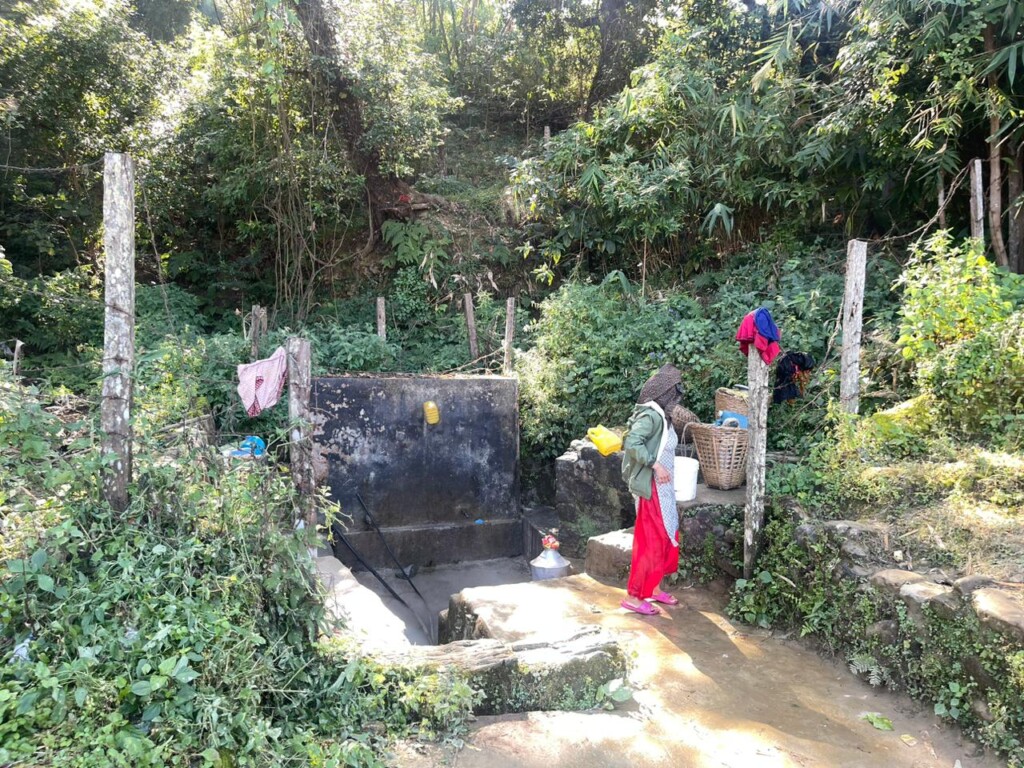
Home to around 150 households, the village relies on a cold storage facility in Kohalpur, over 50 kilometres away, to preserve organic and local seeds. Traditional practices such as beekeeping continue, with hives built into house walls. Access to basic services remains limited. Water is available only briefly in the morning and evening, and one household has no tap connection at all, requiring them to walk for 40-minutes to collect approximately 80 litres each trip using doko, a physically demanding routine repeated throughout the year.
Despite these hardships, the people of Oli Tole express strong pride and attachment to their birthplace. Their warmth, cooperation, and active participation during consultations reflected a deep sense of unity and resilience, qualities that continue to hold the community together.

Rural Realities: Hardship, Hope and Looking Ahead
Far from modern infrastructure and technology, these communities embody both the challenges and strengths of rural Nepal. Poor road conditions reinforce isolation and restrict mobility, and the communities face multiple challenges including a reliance on firewood, limited water access, wildlife damage to crops and livestock and inadequate health and education services. A lack of electricity shapes daily life.
These challenges disproportionately affect women, who shoulder heavy workloads related to farming, indoor air pollution, water collection, and household care, contributing to multidimensional poverty. Labor migration further creates social and emotional strain on families.
Yet the resilience, adaptability, and strong community bonds observed highlight significant potential for meaningful, locally driven development.
With thanks to project funders Jersey Overseas Aid (JOA).
To find out more about the REALIZE 2 project visit our Projects page.