
Cross-learning in action: REALIZE 2 connects people, parks, partners and palikas
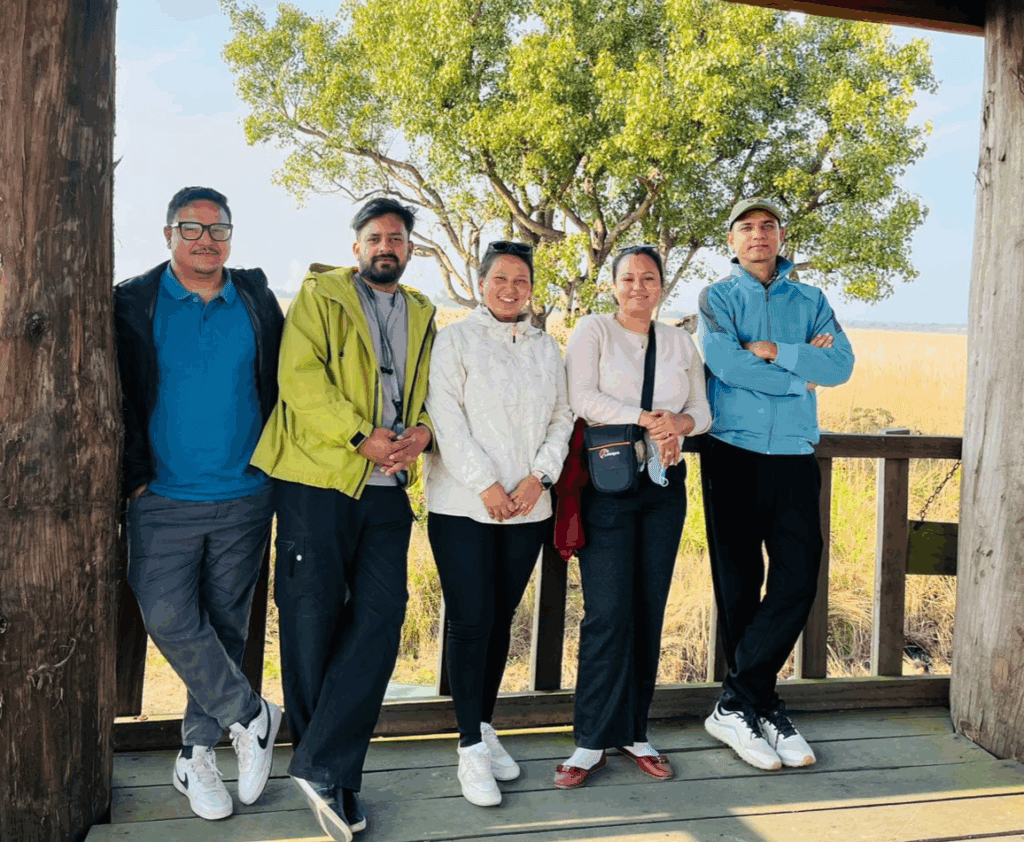
Written by Aarju Karki (Project Manager – Nepal team, second from right in photo)
A cross-learning visit to Shuklaphanta brought communities, park authorities, and local government together to swap practical solutions and strengthen conservation-friendly livelihoods under REALIZE 2.
REALIZE 2 recently brought its 4P Approach (People–Park–Palika*–Partners) to life through an energising exposure and cross-learning visit to Shuklaphanta National Park and CONNECT, another Renewable World project. The visit brought together representatives from Bheriganga Municipality, Barahataal Rural Municipality, Bardiya National Park, and local communities – creating a much-needed space where diverse actors could learn directly from each other’s lived experiences.
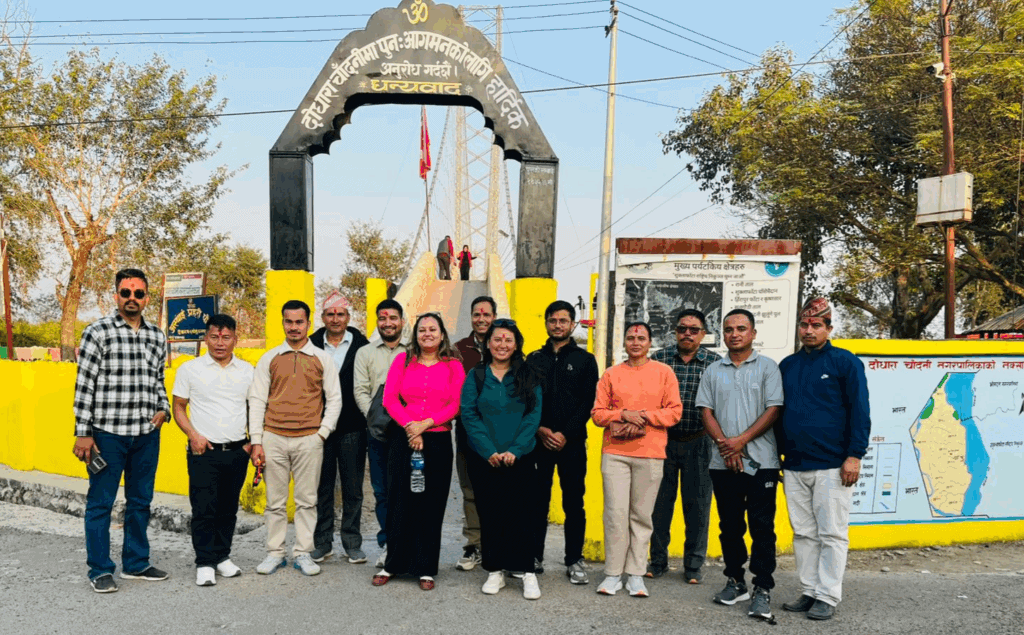
Working in the northern buffer zone of Bardiya National Park, REALIZE 2 champions renewable technologies that strengthen conservation-friendly livelihoods. This visit gathered an impressive mix of leaders and practitioners: the BZUG Chairperson, park officials, Chief Administrative Officers, agriculture and veterinary teams, technicians, and women representatives. Their shared goal, and our chief objective, was to learn together, question together, and build stronger collaboration.
Learning in Johnapur community homestay
The first stop was Johnapur Community, where a thriving community-run homestay allowed us to see how tourism and agriculture can reinforce each other. Community members spoke openly about the challenges brought about by COVID-19 and how they’ve adapted to sustain income and resilience.
A lively exchange unfolded when the Chairperson mentioned their local potato variety, Tharu Aalu. This immediately caught the attention of Top Bahadur Kathayat, a lead potato farmer from Barahataal whose village produced nearly 200 tons last year. What followed was a rich, good-humoured conversation comparing production levels, wildlife pressures, and farming practices across two very different landscapes.
Johnapur farmers shared that they produce 45-50 tons of potatoes annually and face minimal marketing challenges – but wildlife damage remains a constant threat. Top Bahadur’s light-hearted remark that “wild boars and deer might not realise potatoes grow underground” sparked laughter while underscoring how ecological differences shape farming realities.
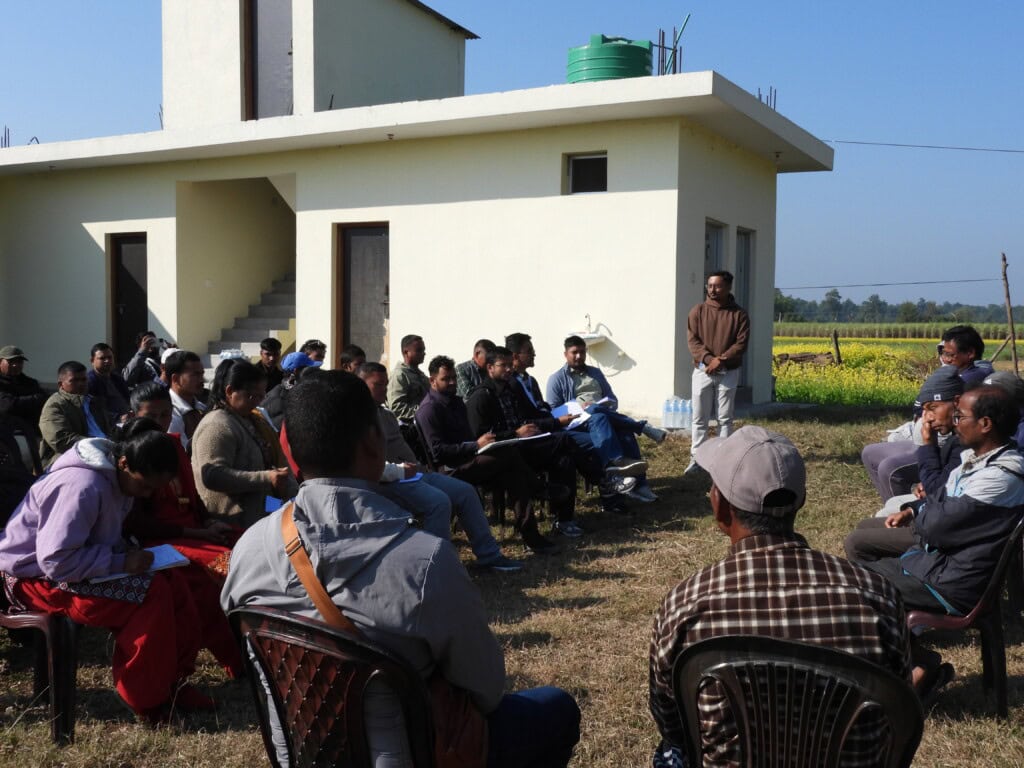
Group discussions with the committee in Johnapur Homestay
Shared challenges and solutions
One issue resonated strongly across both communities: the lack of accessible cold storage. Johnapur farmers currently travel more than 50 km to store potato seeds, an expensive and time-consuming burden. Top Bahadur immediately recognised the same struggle in his own municipality and shared encouraging news that REALIZE 2 is planning to establish cold storage facilities, a solution that could transform productivity for farmers in both regions.
Why do these visits matter?
What began as a field visit quickly evolved into a meaningful and energetic platform for trust-building, problem-solving, and genuine connection. Participants didn’t just observe, they exchanged ideas, challenged assumptions, and discovered practical solutions rooted in each other’s experiences.
This is exactly what REALIZE 2 does best: bringing people together to learn, innovate, and co-create sustainable pathways for conservation and development. The Johnapur visit was a vivid reminder that when communities, local governments, and park authorities share openly and work together, everyone moves forward stronger.
*Palika refers to a local government unit responsible for local planning, service delivery, and community development under Nepal’s federal governance system.
With thanks to project funders Jersey Overseas Aid (JOA).
Find out more about our community-centred and partnership approach.