
A Closer Look: Why championing women matters every day
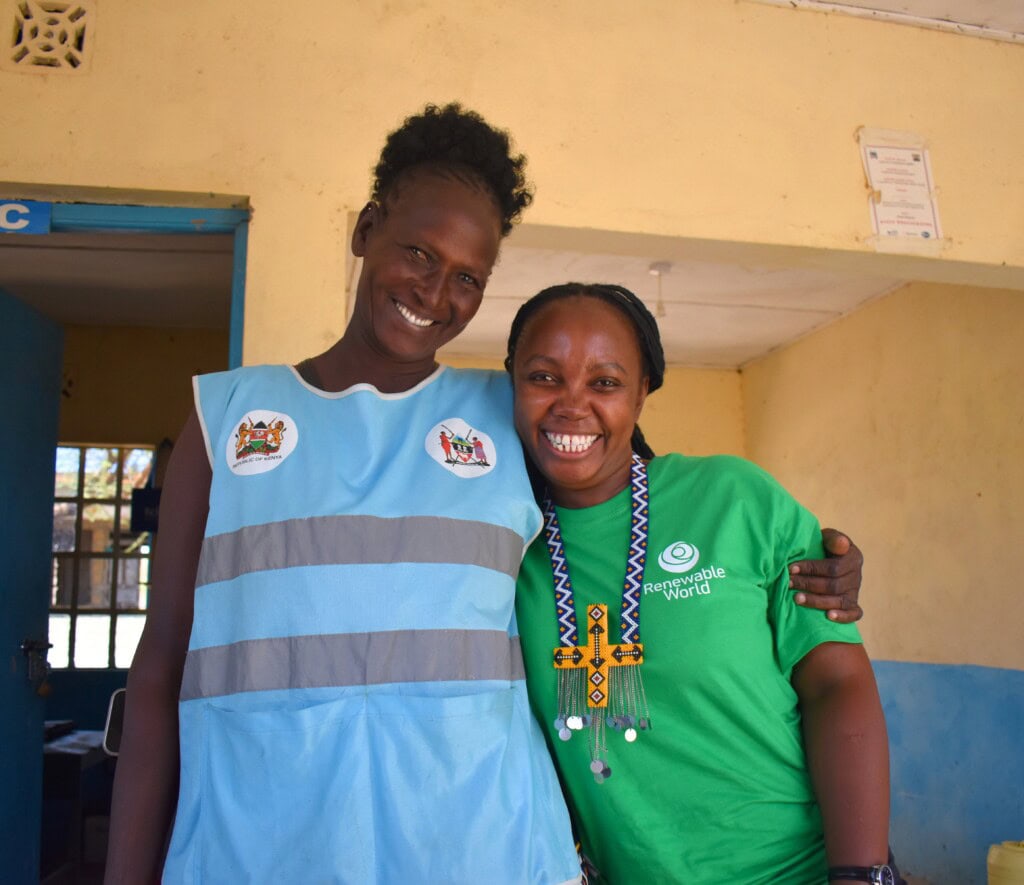
To mark International Women’s Day 2026, Renewable World’s Kenyan Country Director Peris Gathogo takes a closer look at our clean-energy-for-health projects in Kenya. She offers a personal reflection on how they empower women and accelerate progress across entire communities.
Picture above: Peris (right)with a community health promoter
Giving as a catalyst for equality
This year’s International Women’s Day theme, ‘When We Give, We Gain’, invites us to reflect on how giving can drive gender equality – moving beyond aid to transformative change. True giving goes beyond building infrastructure and skills development to creating ownership and opportunities so women can shape their own futures through agency and empowerment rather than merely receiving aid.
At Renewable World, this theme is lived daily in our projects: we introduce renewable energy solutions while equipping communities with the skills to manage and sustain them, and partner with county governments and the private sector to drive scale and sustainability.
The result is measurable progress for women – safer access to maternal and child health services, diversified and increased incomes, and greater dignity and security across households and communities. This kind of giving drives real change – it unlocks women’s agency, strengthens families, and accelerates lasting social progress.
Why are women and girls central to community progress?

Despite progress in Kenya, access to healthcare remains a real challenge for many rural women. In counties such as Kajiado, women often travel long distances, mostly on foot and under the scorching sun, to reach health facilities. Vaccination access for pregnant women and children is limited, and many facilities lack electricity, preventing safe night-time deliveries; when births do occur after dark, staff sometimes rely on torches or phones to illuminate delivery rooms.
A visit to Kajiado made this painfully clear. One woman shared:
“My labour pains started at night, and I needed to be rushed to the hospital. The nearest health facility did not have electricity, so critical equipment for a safe delivery was not functional. My husband got a motorbike to take me to a hospital over 30 km away. Unfortunately, the baby could not wait. I had an emergency delivery by the roadside, where we faced serious health risks and even the danger of being attacked by elephants.”
Thankfully the baby was delivered safely, and they visited the health facility for a mother and child check-up before returning home, but this outcome was far from guaranteed.
These barriers entrench cycles of poverty: when women and children cannot access quality healthcare, they are unable to engage in other productive roles such as income generating activities. In addition, children cannot attend school – therefore affecting future generations.
The solution: Access to clean energy as a form of giving
To address the above challenges, Renewable World has in the past three years supported the solarization of 14 health facilities in Kajiado county in Kenya, alongside community health outreach efforts. This has been done in partnership with the County government as well as the community. Access to clean energy has had far-reaching benefits, especially for women who have improved access to health care. With solar power, health facilities are now providing safer deliveries at night, ensuring vaccines are safely stored, critical equipment is functioning and essential services are running. Solar floodlights installed at community centres have also made it safer for women to walk to the health facilities after dark.
In addition, we partnered with the local health facility nurse and trained traditional birth attendants -supporting them to transition from conducting unsafe home deliveries, to working alongside local nurses and encouraging women to give birth safely in health facilities. As a result, more pregnant women are being referred to and delivering in health facilities.
These improvements have helped ease some of the reproductive and caregiving burdens women often carry, allowing them to focus on other important roles within their households and communities.
Lemeyan’s story
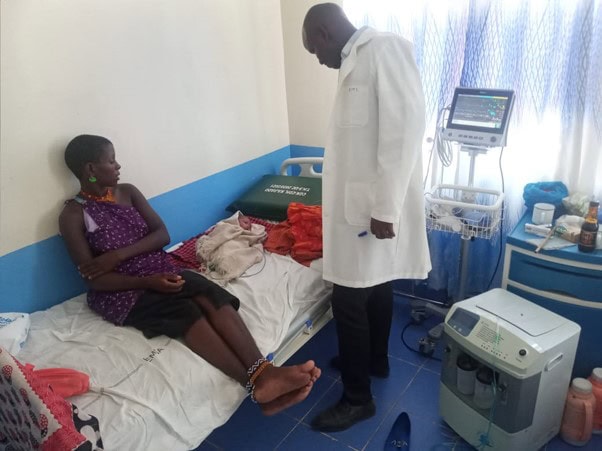
Meet Lemeyan, a mother of three. For Lemeyan the joy of childbirth was often overshadowed by the need for specialised breathing support. After a previous experience where lack of power almost led to the loss of her child, confidence in the local healthcare system was shaken. She turned for help at a private hospital, where there was sufficient power to run health equipment. After learning that Shompole health facility had been solarized she decided to trust them with her 3rd pregnancy. The difference was immediate. When her daughter was born the nurse could utilize the oxygen concentrator. Lemeyan felt safe.
“I am glad I trusted the facility one more time. With the available power, the nurse ensured my daughter was safe from her very first breath.”
When women gain everyone benefits
Improving women’s healthcare creates a ripple effect that strengthens the social and economic wellbeing of communities for generations. The benefits reach families, communities, and the nation as a whole.
When women are healthy, they can work, earn, and contribute fully to economic growth. Their children also benefit – with better access to care, higher school attendance, and improved education outcomes that help break the cycle of poverty.
Why championing women matters every day
As we mark International Women’s Day, I’m reflecting on the positive change Renewable World is helping create for women in remote communities. We’ve made real progress, but there’s still much more to do. By bringing reliable energy to health facilities, we’re creating safer conditions for pregnant mothers and reducing maternal deaths. It’s one clear example of how giving leads to gain – solarising one off-grid clinic at a time and bringing essential healthcare closer to the communities that need it most.
Find out more about our work across Kenya and Nepal by visiting our projects page.